Beaufort Bomber Crash
4th June 1945
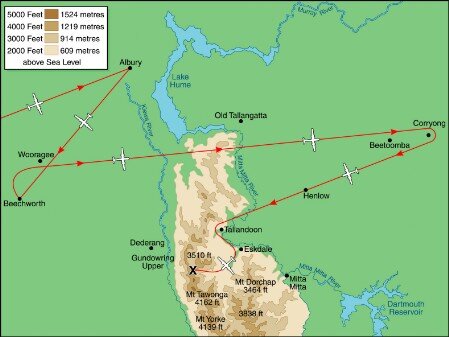
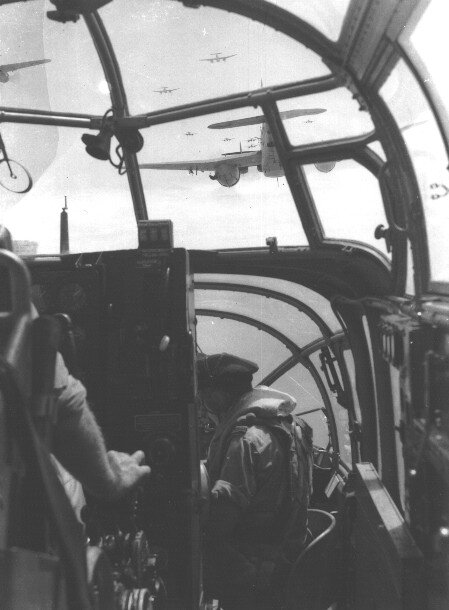
Only weeks before the end of World War 2, a Beaufort Bomber A9-228 on a training exercise became lost at night in north-eastern Victoria near Eskdale. The Beaufort crashed with tragic consequences, the four crew were killed and the resulting RAAF search was botched.
Residents at Eskdale were at the local hall watching a picture - “Going My Way” - when they heard the aircraft thundering overhead and dropping flares. The weather conditions were poor with low cloud and visibility, the crew not realising that they were in mountainous country rather than near East Sale, their expected destination.The crew consisted of Flying Officer Don Flavel – Captain of the Beaufort, Flying Officer Robert Clayton – the navigator, Flying Officer Fred Wallis – wireless operator/gunner and Flight Sergeant Lloyd Sims, also a wireless operator/gunner.
Donald Algernon Flavel – the experienced skipper was 26 years of age and married to Dulcie who at the time of his death was four months pregnant.Don was a farmer from South Australia who loved flying and in particular, instructing other young pilots for operational duties overseas.
Lloyd Joseph Sims from Queensland, 24 years of age, married with a young daughter, Christine, had been a cook before joining the infantry and then transferring to the RAAF as a wireless operator/gunner.
Frederick Anthony Wallis, the second wireless operator/gunner was 31 years of age, married, was from a large Melbourne family. Fred Wallis trained in Australia and Canada and saw action in the European and Middle East Theatres.
33 year old Robert Victor Clayton from West Australia was the Beaufort’s navigator. Robert Clayton was married with three children and had been a farmer and orchardist before joining the RAAF.
After exercising in Bass Strait, the Beaufort proceeded to Mount Gambier where the crew rested before continuing the return leg of their training exercise.
At 5:33pm – right on dusk - the Beaufort departed Mount Gambier for East Sale.
Due to an early navigational error, the aircraft was heading towards Albury instead of East Sale and as the aircraft neared Albury the crew were convinced that they had reached East Sale. Confused by not locating the East Sale Aerodrome, the crew flew an erratic course for over an hour in an attempt to find their destination. The weather was poor and the skipper descended to the cloud base in an attempt to locate familiar ground.
At 8:16 pm the Beaufort flew over this very spot dropping flares and with the powerful landing lights on. Two minutes later A9-228 collided with the northeast slopes of Mt Tawonga, the aboriginal name ironically meaning “flight through the air, as of birds or spears”.
Over the next five days an aerial search failed to find the missing airmen.
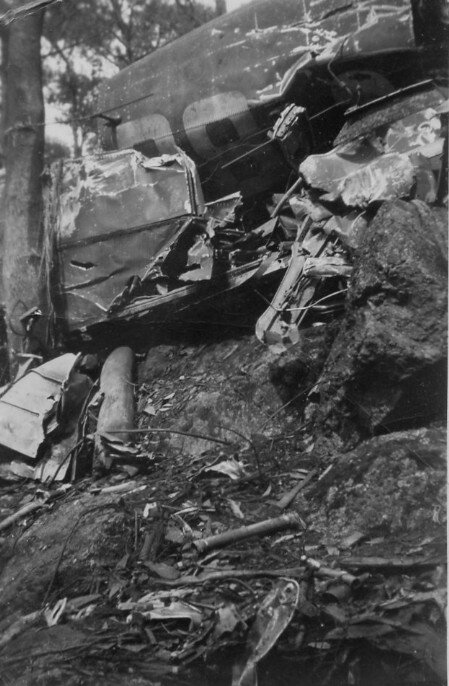
Three hours after commencing the search and exactly eight weeks after the crew went missing, Dick Hamilton and his team came across the wreck of the missing Beaufort. This was only days before the Japanese surrendered.
At 5:33pm – right on dusk - the Beaufort departed Mount Gambier for East Sale.
Due to an early navigational error, the aircraft was heading towards Albury instead of East Sale and as the aircraft neared Albury the crew were convinced that they had reached East Sale. Confused by not locating the East Sale Aerodrome, the crew flew an erratic course for over an hour in an attempt to find their destination. The weather was poor and the skipper descended to the cloud base in an attempt to locate familiar ground.
At 8:16 pm the Beaufort flew over this very spot dropping flares and with the powerful landing lights on. Two minutes later A9-228 collided with the northeast slopes of Mt Tawonga, the aboriginal name ironically meaning “flight through the air, as of birds or spears”.
Over the next five days an aerial search failed to find the missing airmen.
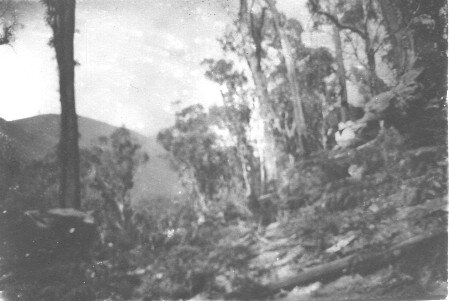
Searches by horseback and foot were conducted from both the Kiewa and Mitta Valleys but to no avail. These searches were conducted by various small groups of men including the Voluntary Defence Corps -following personal theories as to where on the Eskdale Spur the Beaufort had crashed. The searchers knew approximately where they would find the aircraft but the consistently inclement weather and the density of the bush as well as the steep terrain prevented an early result. The searchers knew that eventually the aircraft must be found.
Finally, family members of Fred Wallis from Melbourne agitated for ppermission to conduct a private search from intelligence supplied by the RAAF. Bill Daniel together with Albert and Ted Wallis came to Eskdale and enlisted the support of the Voluntary Defence Corps, then headed by Acting Lieutenant Dick Hamilton.
Over 90 Beauforts crashed in East Gippsland between 1942 and 1945. In 42 months, the RAAF base at East Sale had suffered 147 aircraft accidents which left 131 aircrew dead or missing. More aircrew were being killed in training than in battle!
We now know a lot more about how aviation accidents occur and how to reduce them, but flying can never be 100% safe.
A book is available detailing the crash