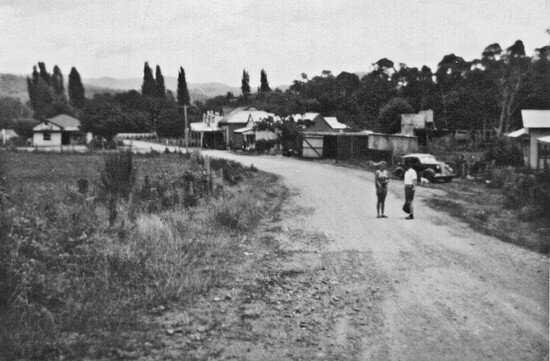
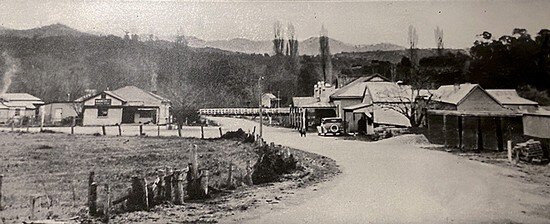
Mitta enjoys an interesting past with many different economic periods, each making an impact on what is today a fascinating little town
The hamlet of Mitta Mitta in north-east Victoria nestles between two mountains that adequately epitomise contrasting historical fortunes, Mount Misery and Mount Welcome. The village owes its existence to gold and the name is taken from the grand river that was first discovered by explorers Hume & Hovell in 1824 on their southwards trek. The name "Mitta Mitta" derives from the name local aboriginals gave to the Mitta Mitta River - "mida-modunga' (where reeds grow, modunga a certain type of reed). The Mitta Mitta River is an important conduit for the Dartmouth Dam, the major drought storage for the Murray Darling Basin.
The River rises from the rugged mountains making up the Great Dividing Range with much of its volume from its major tributary, Big River. Big River's source is the south-eastern catchment of Mount Bogong, Victoria's highest peak, taking in melting snows and run-off from a large area of pristine bush. As the Mitta Mitta River rushes in a generally northerly direction, it picks up water from a plethora of creeks and streams until the Murray River is reached at the Hume Weir. Prior to the Dartmouth Dam completion in 1979, the River regularly flooded, providing a stable water table, nutrients for the valley soils and the means for flora propagation.
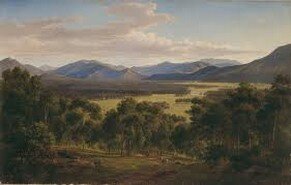
The Mitta Valley was a very popular desination for 19th century artists such as Von Guerard and Chevalier.
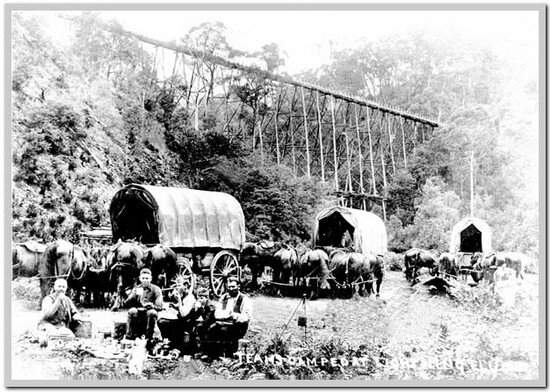
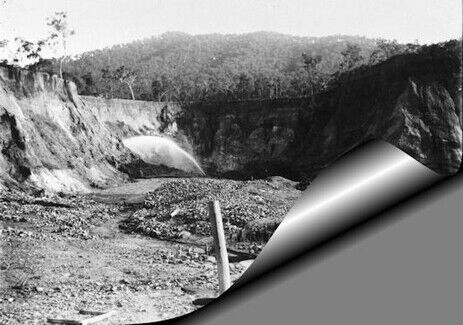
One of the most famous historical photos in Australia, the Lightning Creek Flume
To the south terrain rises sharply from the valley to the mountain backdrop dominated by Mount Bogong and the Great Dividing Range. Dry sclerophyll forest proliferates above the valleys and as altitude and rainfall increases from Mitta Mitta's 1044 mm average, wet sclerophyll and eventually alpine vegetation takes over.
Early paintings of the Mitta Valley depict the valley floor as open woodlands that made travel easy for aboriginals and settlers alike.
Aboriginal tribes used the River as a food source, social connections, trading and sometimes wars. Their presence in the area goes back at least 4,000 years and artefacts are frequently located along the extent of the River and its tributaries. Tribes from further west made an annual six-week summer pilgrimage to Mount Bogong via the Dorchape Range to feast on the Bogong Moth. Although miners found abundant evidence of aboriginal activity there was very little contact, no wonder when their river and stream food source had been commandeered. Earlier pastoralists did come into frequent contact and were forever on guard in case of attack. The principle tribe in the district was the Jaitmathang with the Theddora-mittung occupying the area round the southern end of the Mitta Mitta Valley in the vicinity of the present township. The language spoken was a dialect of Dhudhoroa . By 1863 there were only 45 aboriginals recorded at Tangambalanga and by 1875 the aboriginal presence had almost disappeared.
Early pastoralists arrived at the Mitta Valley in 1835 and by 1837 James & William Wyse had taken up Mitta Station that was centred on what is currently the Mitta township. William Wyse was also the original prospector to search for gold in the Dark River (now called the Dart River) area.
Located at the confluence of the River and Snowy Creek, Mitta Mitta was firstly titled 'Junction Snowy Creek' or 'The Junction', and later - in 1876 - was officially proclaimed as Mitta Mitta (village). The location at the southern end of the intermontane valley was geographically strategic since it provided access to Omeo and mining rushes to the Wombat, Lightning, Dart and Mount Wills gold fields, initially via bridle tracks and later with improved tracks and roads. Mitta Mitta became the natural site for a settlement, the police station was erected in 1859 and in 1870 the first Post Office was opened by Thomas Grant.
Magorra Park was gazetted in 1884 as a recreational reserve and in 1886 the first race meeting was conducted to become a feature every Boxing Day.

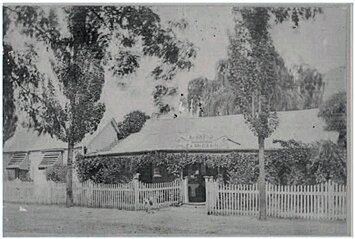 Granite Flat (earlier called Snowy Creek) to the South of Mitta Mitta was the scene for extensive alluvial mining and a large itinerant population associated with mining interests. The Post Office opened for business in 1859 and various waves of miners filled and emptied the 'Flat' as news of rushes elsewhere enticed diggers to better pickings.
The population peaked at about 400 but by the time the Flat had been proclaimed a township in 1891 the major mining activities were all but over and today the only remaining remnant is the Catholic Church.
Mrs Torrens ("Annie") McCann ran the guesthouse and introduced her own private school to further the education of locals. In conjunction with a Melbourne scientist, identified new plant species, her passion was the wattle. She wrote poems about wattle and painted wattle, she became a local activitist for Federation and later for wattle to be part of the Australian emblem. Annie McCann was soon working with others to have 1st September declared as Wattle Day. The Mitta Wattle (Accacia dawsonii), also known as the Povery Wattle is Mitta's floral tribute.
James Albert Hedley was a member of the famous Hedley mining family and the leading figure in the development of the Union and Pioneer mines as well as reef and nearby tin mines. It was James who brought the hydraulic sluicing technology from Cobungra where James's younger brother was Mine Manager. Brother Robert was famous for the design of water races including the longest in Australia through mountainous terrain. The Pioneer company built James a house at Wombat Gully where he lived for 12 years until leaving to try his luck at the Klondike (Canada).
Gold was first discovered at the northern end of the Mitta Valley in 1851 and the following year at the junction of the Snowy Creek, right behind the Mitta Pub. Alluvial gold continued to be mined in the creeks and streams with various breaks when more major discoveries were located at Granite Flat, the Wombat and Dark River.
The big break occurred in 1884 when the Union Gold Sluicing Company was formed to commence open cut operations at the back of the township using hydraulic sluicing, a newly imported idea from California. Soon after, the Pioneer Hydraulic Mining Company commenced operations next door and absorbed the Union company and became a very successful enterprise. The mine was managed during its formative years by one of the famous Hedley brothers, James. The red-orange escarpment is now a feature backdrop of the town can be easily seen from passing overhead aircraft on their way to Melbourne at 35,000ft.
Dredging operations commenced in 1906 in an area which is now occupied by the Magorra Caravan Park and this produced 167Kg of gold until the company folded in 1913. Just as well, since that same year the State Government established an enquiry to deal with the huge ecological damage caused by dredging and the resulting controls placed by the Government rendered a lot of dredging uneconomical.
The Pioneer Mine
The heritage-listed Pioneer Mine situated right next to Mitta Mitta was the site of a successful open-cut gold mining operation utilising the hydraulic sluicing method. Water races were cut bringing water from many kilometres away which was then used in large pressure hoses to release the dirt. The slurry was then passed through a sluice where the gold was trapped. The remaining water and materials were then removed from the mine via a tail race to the Mitta Mitta River causing considerable pollution. 441 Kgs of gold was extracted before the mine ceased operations in 1904, due mainly to the Federation Drought and the drying up of local water sources. Hours can be spent exploring the old mine and checking out the plants and animals in this wonderful amphitheatre administered by Parks Victoria.
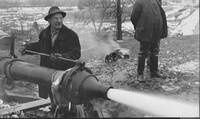
The Union Gold Sluicing Company was set up in 1884 to take over some small claims behind the town and to raise sufficient capital to establish a much larger enterprise using hydraulic sluicing. The open-cut claim at Mitta Mitta was the third site in Australia to use this technology that originated in California and was the cause of much political agitation because of the down-stream pollution. Unfortunately, the "Union" became hemmed in by the neighbouring "Pioneer" claim so it was decided to amalgamate both claims.
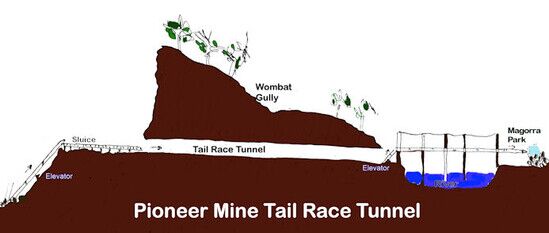
The Pioneer Tail Race Tunnel runs under Wombat Gully and was used to remove the tailings from the mine. A hydraulic elevator was used to lift the material from the mine floor to the sluice, the material and water then ran through the tunnel, again elevated to pipes suspended over the Mitta River and dumped to what is now the Mitta Caravan Park. This solved one of the big problems of the mine being cluttered with debris from the sluicing process.

Further reading .......
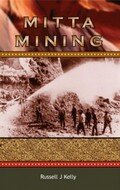
Mitta Mining by Russell J Kelly (2007) is a comprehensive historical account of gold recovery around Mitta Mitta, Victoria. ISBN 9780957853317 .
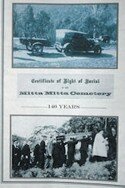
Mitta Mitta Cemetery -140 years (2009) by Janet Duncan. A comprehensive and detailed listing of burials 1867-2007 with biographical material and newspaper obituaries and articles. Copies available from the Mitta Valley Heritage Society.
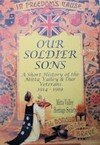
Our Soldier Sons - A Short history of the Mitta Valley & Our Veterans 1914-1919, Mitta Valley Heritage Society, 2001 ISBN 0-646-41468-2
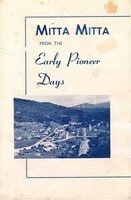
Mitta Mitta from the Early Pioneer Days (1953) written by Mitta's then Postmistress provides a valuable and early sketch of the town.
Going My Way - The Story of the Mysterious Crash of a Beaufort Bomber (3rd edition 2008) by Russell Kelly is an account of a tragic WW2 accident near Eskdale, Victoria. ISBN 9780957853324.
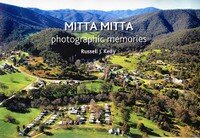
Photographic Memories by Russell Kelly is a vivid takeaway record and certainly an invitation to come and further explore the colour and light whilst enjoying the many attractions of wonderful Mitta Mitta. Packed with magnificent photographs of Mitta and the Mitta Valley.
And After Mining the Valley has experienced two major agricultural phases following the initial cattle grazing. Cropping was important although regular valley flooding made this difficult. Some of the first tobacco harvested in Australia came from the Mitta Valley and vineyards were popular before phylloxera destroyed the crops in the 1890's. From 1900 dairying and some pig farming was strong until around 2012 when the number of dairies decreased due to small uneconomical holdings, problems with the local co-op and market conditions. Beef cattle is now the major activity although new agricultural startups include hazelnuts and mushroom growing.
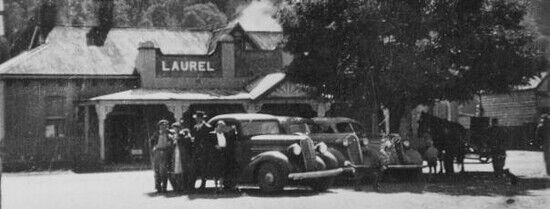
At one time Mitta boasted three hotels and the survivor, the Laurel Hotel (now called the Mitta Pub), still operates on its original site on the bank of the Snowy Creek. The pub has been extensively renovated and a new brewery has been established on Dartmouthn Road
Mitta's demographics has changed and today with a permanent population of around 45 , the town relies on tourism for its existence.
Bush fires came close in 1939 but the biggest threat occurred in the early part of 2003 when fires surrounded the village for nearly five weeks. Fortunately there was no loss of life or property within the town but the intensity of the fire seriously destroyed nearby State Forest and some farming land. Fires again threatened in 2020 followed by the NOVID-19 pandemic that seriously affected tourism revenue.